The Scissor Move: It’s Not What You Think
From understanding the high and low mobile point to understanding what actually drives a hitter’s movement.

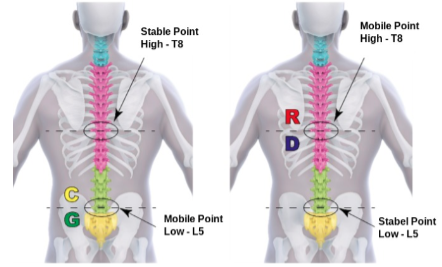
Last week, we explored the differences between the high and low mobile point in the spine.
This week, let’s put that knowledge into practice.
The so-called scissor move has become a popular topic in Hitting. Social media is full of explanations, drills, and even gadgets designed to teach it. But the discussion goes beyond the movement itself. Increasingly, people are attempting to connect observed movement patterns to motor signatures.
A post published just a few days ago offers a perfect example. It suggested that observing how a hitter jogs — how he moves off one leg, how grounded he appears on the other, and how he seems to swing against his front leg — might reveal how he organizes his movement at the plate. Coaches were then encouraged to look for similar patterns in walking, jogging, and everyday actions and consider how these might translate into the swing.
But there is a fundamental problem with this approach.
Observing is gambling!
Observing a movement is not the same as understanding what drives it after professional profiling. You can identify a pattern, draw a connection, and build an explanation around what you see. But if you don’t understand the underlying motor signature, that explanation can be incomplete — or simply incorrect. And when those assumptions are presented as knowledge about an athlete’s Motor Signature, observation has been mistaken for understanding.
The same problem appears in discussions about the scissor move. Some explanations link it specifically to anterior muscle-chain dominance individuals, suggesting that this preference explains the movement. But that misses the fundamental point: hitters with different muscle-chain preferences can demonstrate the very same movement.
So what actually explains the scissor move?
Watch the video here:
In this practical breakdown, we examine four hitters with different muscle-chain preferences who all demonstrate the same movement pattern.
The video shows why and how; understanding this connection changes how we interpret what we see on the field.
Because in MotorBall, the goal isn’t simply to observe movement. It’s to understand why it happens.